Henry Ford didn't set out to build the American outdoor economy. He set out to give ordinary Americans what he was already experiencing — the freedom of the open road, the restoration of the wilderness, the conviction that time outside the factory made human beings more whole. The economy followed the conviction. It always does. And a hundred years later, the story he started is still being finished.
Before Henry Ford, the American wilderness was the province of the wealthy. You needed horses, guides, gear, and time — none of which the working American possessed in abundance. The railroad could take you as far as the tracks ran. After that, you walked.
The Model T changed the geometry of American life. By 1914, Ford's assembly line had brought the price of a car within reach of the workers who built it — a deliberate act, not a market accident. Ford believed his employees should afford the product they made. He fought the Dodge Brothers in court to prove it — not on behalf of shareholders, but because he wanted to reinvest profits into higher wages and lower prices. The Michigan Supreme Court ruled against him, enshrining shareholder supremacy as American legal doctrine. He lost that legal battle. The cultural one was already won.
What the Model T actually democratized was not just transportation but possibility. For the first time, a family in Ohio could decide on a Friday afternoon to sleep somewhere they had never been. The road was rough, often unpaved, occasionally impassable. None of that mattered. The machine was simple enough to fix beside it.
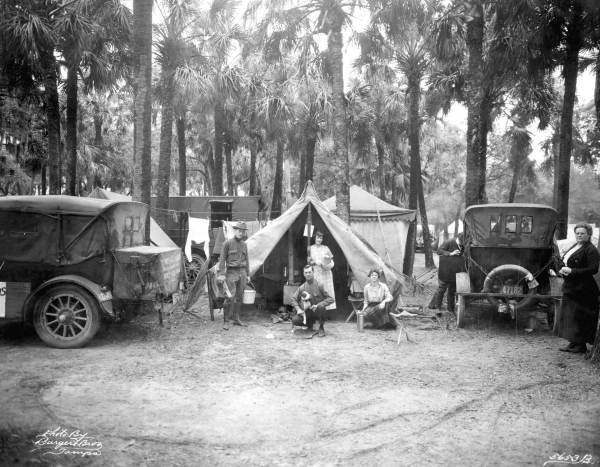
These early auto campers — the men and women who lashed bedrolls to their running boards and tied canvas to their fenders — were not following a trend. They were inventing one. No guidebooks existed. No campgrounds had been designed for them. The hack was not a subculture. It was the only culture available. And it was exactly what Ford intended.
In 1914, Henry Ford and naturalist John Burroughs traveled to Fort Myers, Florida, to visit Thomas Edison. They explored the Everglades together. The experience lodged something in Ford that no boardroom ever could — the particular combination of freedom, curiosity, and restoration that only comes from sustained time in the natural world.
The following year, Ford, Edison, and tire magnate Harvey Firestone took a road trip through California. They enjoyed it enough to agree to do it every summer. They named themselves the Vagabonds. What followed over the next decade was, in the words of historians, "the first notable linking of the automobile with outdoor recreation" — and Ford made certain the world knew it.
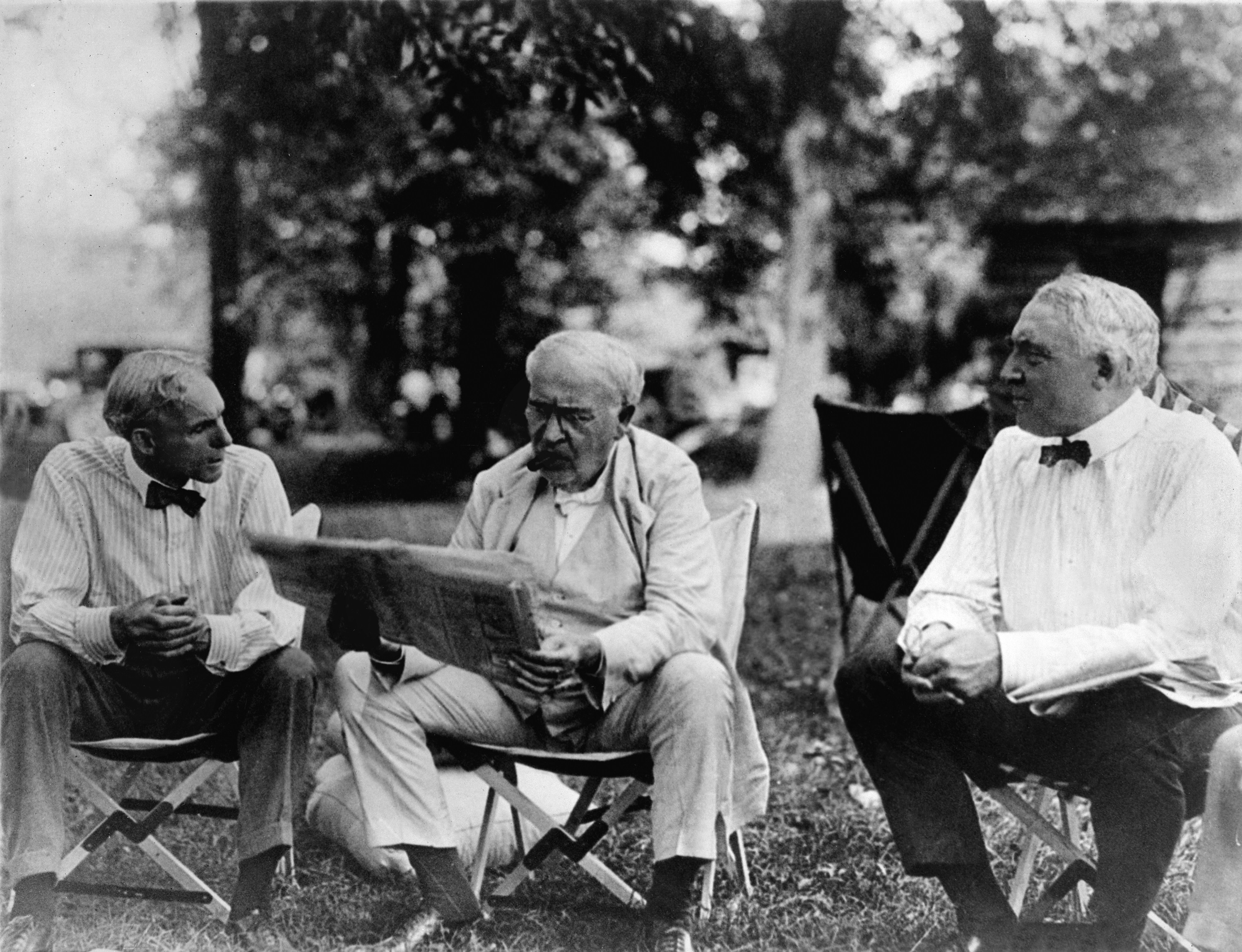
Ford brought a film crew. He understood — instinctively, before the language of media strategy existed — that the story of celebrated men sleeping under stars would do more for the automobile than any advertisement. The newsreels ran in theaters nationwide. Newspapers covered every trip above the fold. For the first time, ordinary Americans watched the most famous men in the country park their Model Ts in the wilderness and call it freedom.
Two sitting Presidents joined the trips — Harding in 1921, Coolidge in 1923. The surrounding woods were patrolled by the Secret Service. When the President of the United States came to your campsite, the outdoor lifestyle was no longer an eccentricity. It was the aspirational center of American life.
"With squads of news writers and platoons of cameramen to report and film the posed nature studies of the four eminent campers, these well-equipped excursions were as private and secluded as a Hollywood opening — and Ford appreciated the publicity."
— Charles E. Sorensen · My Forty Years with Ford · On the Vagabond camping trips, 1914–1924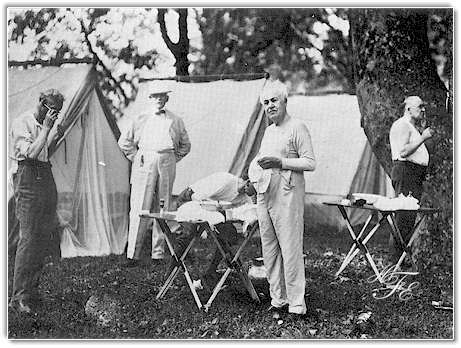
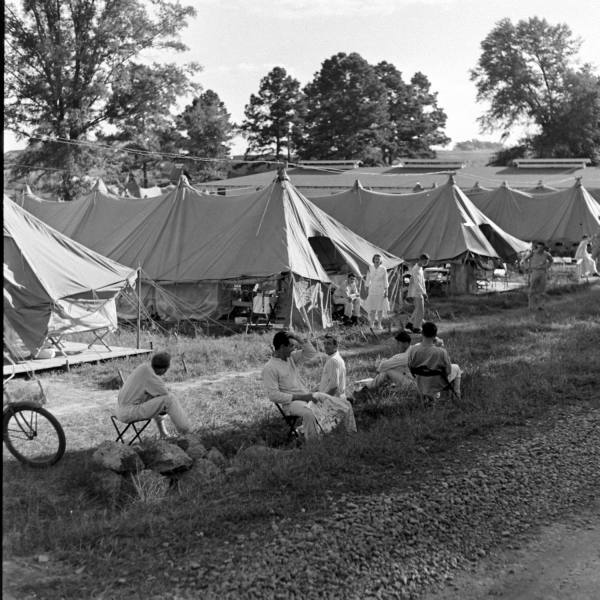
The Vagabond newsreels did their work. By the early 1920s, auto camping had swept the country. Families who had never seen the inside of a hotel were sleeping in meadows and cooking beside mountain streams. The automobile hadn't just changed how Americans traveled — it had changed what Americans believed was possible for them.
Ford believed what he was demonstrating. He believed, with the same intensity he brought to every engineering problem, that if more Americans could experience what he was experiencing in those mountains and forests, the world could be a better place. The film crew wasn't cynicism. It was the delivery mechanism for a conviction.
Vaga
bonds
The most comprehensive account of Ford and Edison's ten-year road trip and its lasting impact on American culture, the automobile industry, and the outdoor economy. Described by NPR as "a portrait of America's burgeoning love affair with the automobile." Available wherever books are sold. The essential companion to this article.
Harvey Firestone was not a passive participant. He was the commissary officer of the Vagabond trips — he organized the food, hired the cooks, managed the expedition's supply chain. And he was, every mile of every trip, sitting on top of his own product problem.
America's roads in 1914 were not roads. They were ruts, mud, rock, and unpredictability. Every Vagabond trip was, by definition, an off-road journey. The tires that failed on those routes failed in front of the man whose name was on them. Edison spent roadside stops collecting sap-filled plants — searching for alternatives to natural rubber that Firestone could use in his tire compound.
The all-terrain tire did not emerge from a laboratory. It emerged from a decade of field failure on the worst roads in America, experienced firsthand by the man who had to fix it. The Vagabond trips laid the foundation for the 100-year relationship between Ford and Firestone. Firestone tires were original equipment on Ford vehicles for nearly the entirety of the twentieth century. Experience first. Product second. Every time.
Ford's sawmills in Michigan's Upper Peninsula were generating mountains of wood waste. The instinct that had driven him to see a car where others saw an unaffordable machine now drove him to see a product where others saw a disposal problem. He contracted a trusted Ford dealer — his cousin-in-law, E.G. Kingsford — to arrange the purchase of 313,000 acres of timberland. Kingsford became VP of Ford's northern Michigan operations.
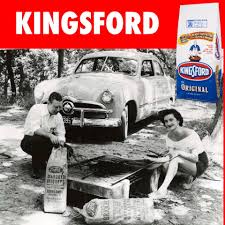
The waste wood was carbonized, compressed with starch, and turned into charcoal briquettes. Workers produced nearly 100 tons per day. Ford sold them through his dealership network alongside the cars — the first vertically integrated outdoor lifestyle ecosystem in American history. He gave you the vehicle, showed you the destination through his newsreels, and then sold you the fuel for the fire when you arrived.
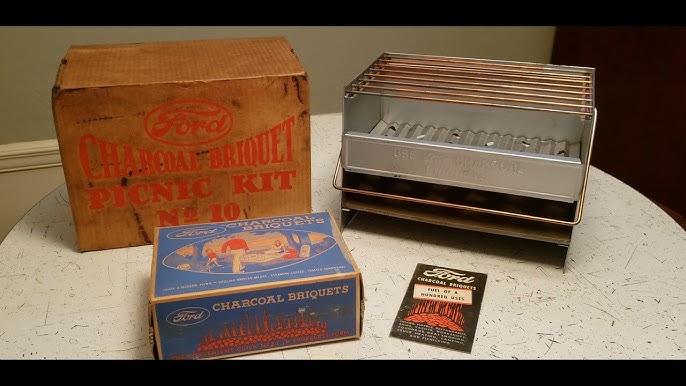
Picnic Kit · No. 10
The physical object that closed Ford's outdoor ecosystem loop. A portable grill, a bag of Ford-branded briquettes, and an instruction booklet — sold at Ford dealerships alongside the Model T. The RAAK of 1935. One product, one vision, sold at the exact point where the vehicle was purchased, for the experience the vehicle was purchased to reach.
From the Collections of The Henry Ford
The Name That Explained Itself.
When Ford eventually sold the charcoal operation, it was renamed for the man who had made it possible — E.G. Kingsford. The dealer. The executor. The cousin-in-law who arranged 313,000 acres and built a hundred-tons-per-day operation from sawmill waste. And the town in Michigan where the plant operated was renamed Kingsford too. His name now sits on every bag of charcoal sold in America.
But sit with the name itself for a moment. King. Ford. Whether the compound was intentional or simply the accident of a family name, it is difficult not to notice what it describes: the king of a category that Ford created. A ford crossed by a king. The monarch and the vehicle — the two most powerful words in the entire story, fused into a single brand that has never been dislodged.
Kingsford has never relinquished market leadership. From the day Ford sold the operation to today — dominant. Which leads to a pattern worth naming:
Products born from genuine conviction and lived experience don't just win categories. They become the category. The name Kingsford may be the most elegant compression of that truth in American commercial history — two words that contain, without explanation, the entire story of how a Ford dealer became a king.
The Wheel and the Spark.
King. Ford. sits in the Kingsford name — the king of the category Ford created. But there is a second name in this story that repays the same attention. The man who spent ten years on unpaved roads feeling his tires fail — who went home every autumn to build a better wheel — carried in his name the two most primitive technologies in human history.
Fire. Stone. The first wheel was stone. The first fire was struck from stone. The thing that burns and the thing that rolls. Kingsford gave Ford the fire at the destination. Firestone gave Ford the stone that got him there.
Both names told you exactly what they would contribute — if you knew how to read them. The story was always hiding in plain sight. King. Ford. Fire. Stone. Four words that between them contain the entire arc of this lineage: the monarch, the vehicle, the flame, the wheel. The outdoor economy compressed into two surnames from the same decade, carried by two men who may never have noticed what they were carrying.
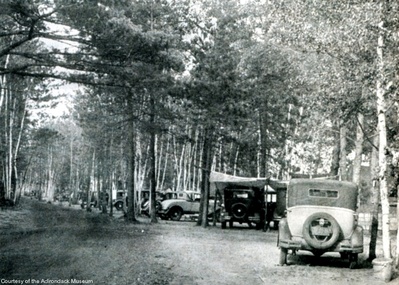
While Ford and his famous friends were camping with butlers and a Waldorf-Astoria kitchen car, ordinary Americans were doing the same thing with considerably less. They were called the Tin Can Tourists — families who loaded their Model Ts with everything they owned, drove until the road ended, and made camp wherever the land said yes.
They heated tin cans on gasoline stoves. They rigged canvas awnings from their running boards. They turned every surface of the vehicle into a functional platform — the hood as a prep table, the running board as a bench, the roof as cargo space that would eventually become, decades later, a rack for bicycles and kayaks and gear of every kind.
The hack was never fringe. It was the dominant mode of outdoor engagement for ordinary Americans from the moment the Model T made the road accessible. Every one of them looked at what they had and asked the same question: what else can this do?
— The Continuity of Experience · Tymmber Franklin Library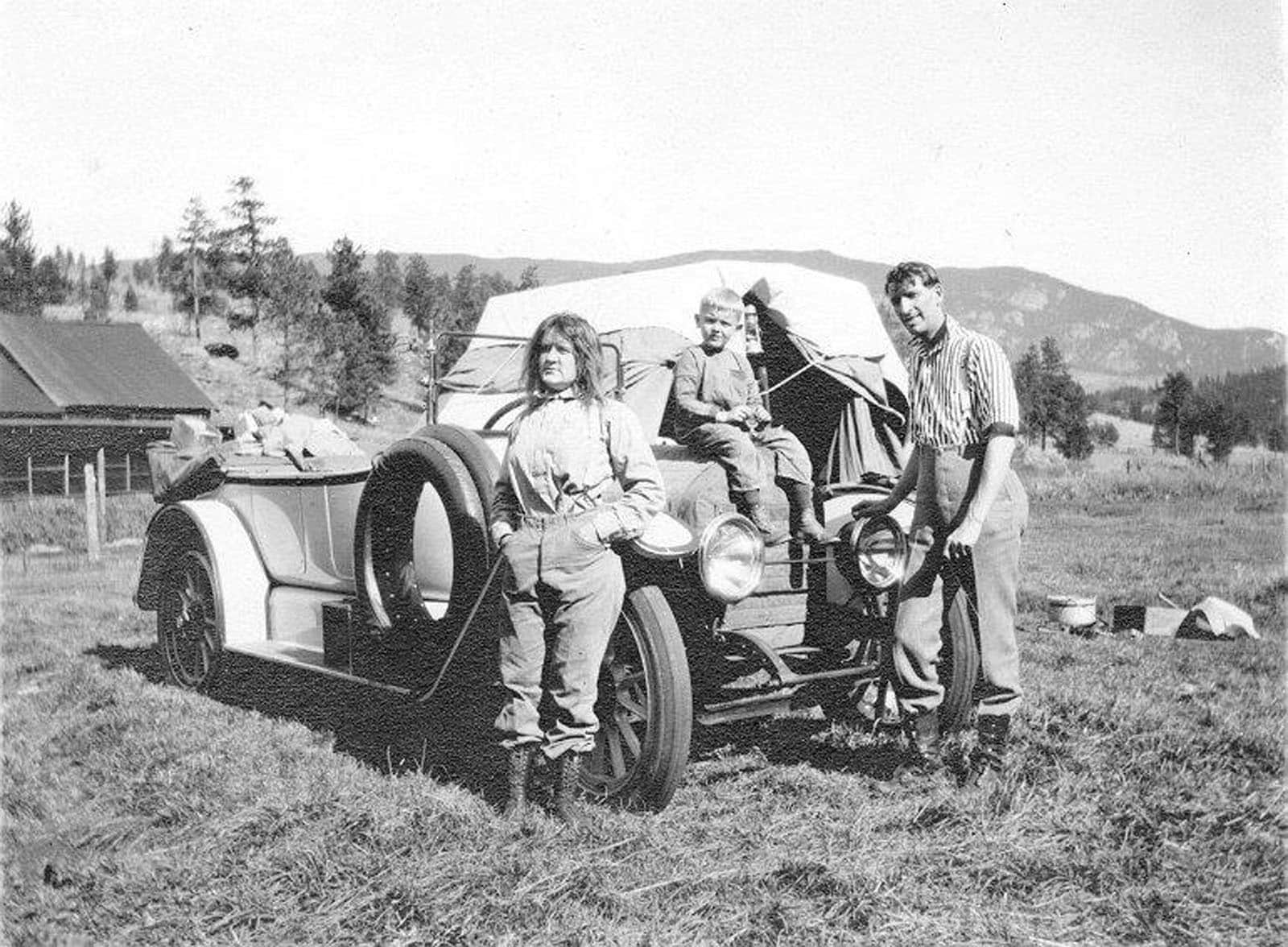
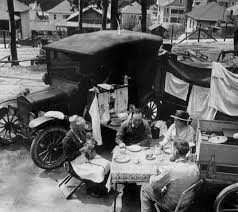
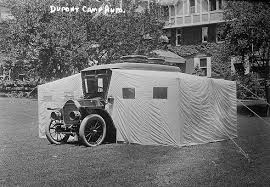
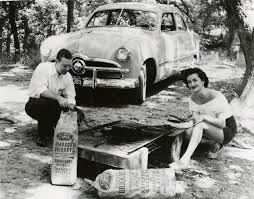
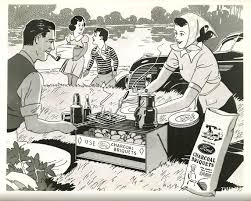
Duron's Camp Auto. The family dining table set up at the car door. The couple with Kingsford briquettes beside their Ford in the 1950s. These are not separate stories. They are the same story told across five decades by people who shared one instinct: the vehicle is a platform. The question is always what else it can carry, shelter, enable, or become.
Wally Byam was born July 4, 1896 — the Fourth of July, as if the date were a design decision. He grew up on a sheep farm in Oregon, living in a wooden wagon towed by a donkey, with a stove, food, water, and everything he needed inside. He carried that image his entire life.
By 1929, Byam was a publisher in Los Angeles with a wife, Marion, who hated sleeping in tents. His solution was the solution of every great outdoor entrepreneur: he looked at what was already in front of him and saw something nobody else had. He purchased a Ford Model T chassis. He built a platform on it, towed it to a campsite, and erected a tent. Miserable in rain. So he replaced the tent with a teardrop-shaped permanent structure — a small ice chest and a kerosene stove inside.
The first Airstream was born on a Ford platform, solving a problem that Ford's own outdoor culture had created the demand for. Byam published instructions in Popular Mechanics: "How to Build a Trailer for One Hundred Dollars." He earned more than $15,000 from $1 plans. He opened a factory in Culver City in 1931. The Airstream Clipper followed — riveted aluminum, semi-monocoque construction, insulated walls, its own water supply. The vehicle that Ford democratized, Byam had now made habitable for weeks at a time.
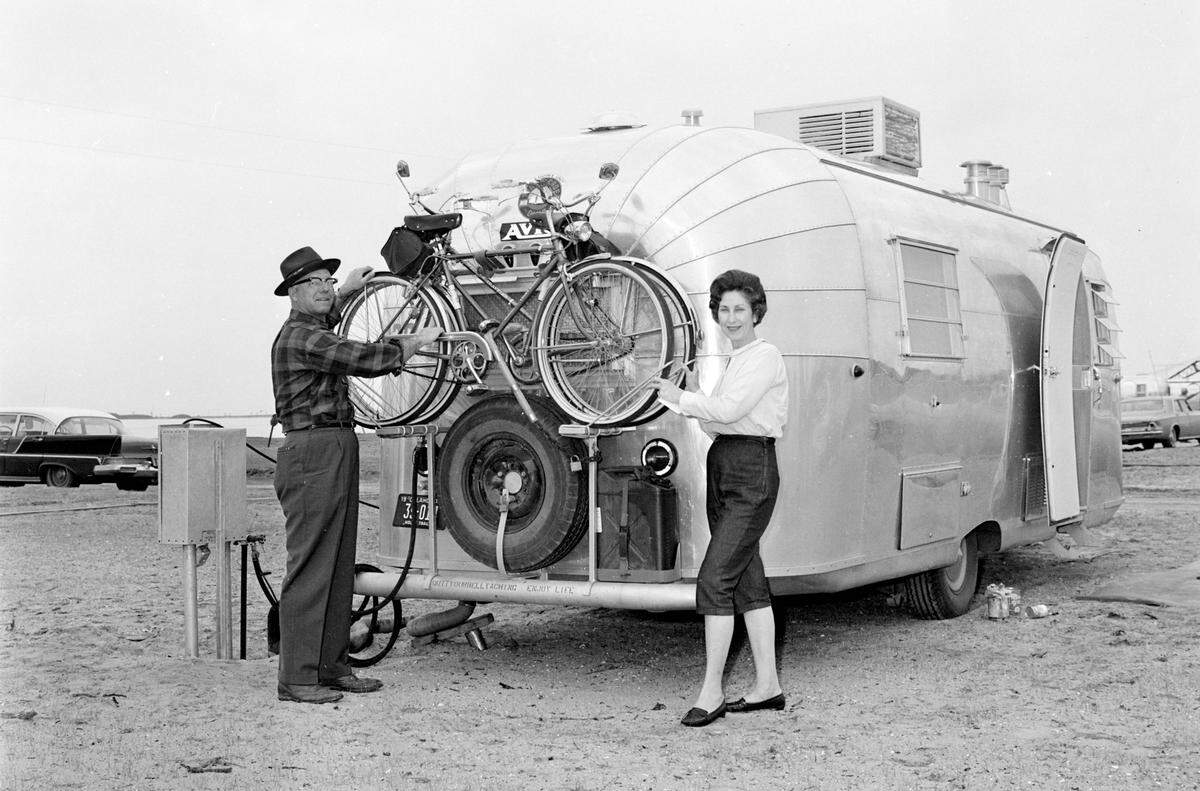
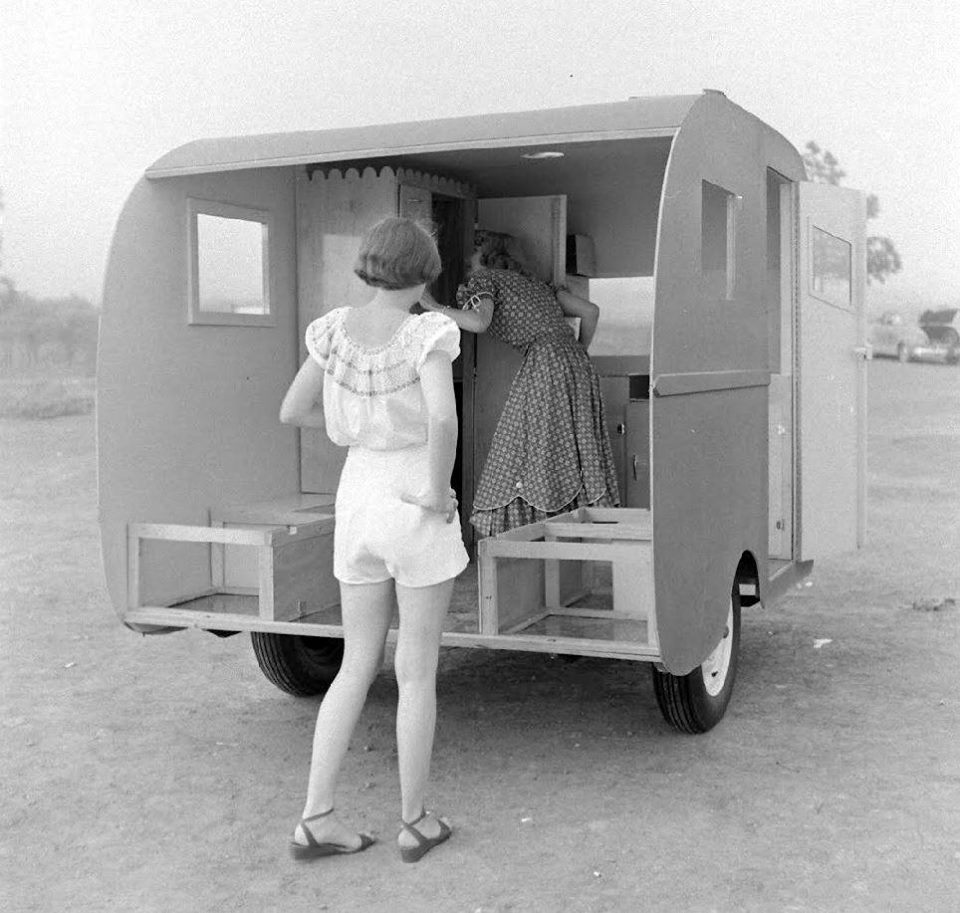
Byam didn't invent the desire to live from your vehicle. Ford had already put that desire in the culture. Byam solved the comfort layer. And in the photograph above — an Airstream in the 1960s, Byam's greatest product fully realized — two bicycles are mounted on a rack at the hitch. Someone in that decade was already asking the next question. What else can this hitch carry? They just didn't have the system to answer it properly. That answer was sixty years away.
George Stephen was a part-owner of Weber Brothers Metal Works outside Chicago, spending his days welding metal half-spheres together to make buoys for the Coast Guard. He was not a designer. He was a working man who came home every evening and burned his dinner on a flat open brazier — cooking over briquettes that were almost certainly Kingsford's, the product of Ford's sawmill waste, the fuel of an outdoor culture that had been building for forty years.
One evening, frustrated with ash blowing into his food, he looked at the buoy molds in front of him and saw what nobody else had in twenty years of looking at the same objects. He took two halves, added three legs and a handle, punched holes for airflow on a neighbor's suggestion, and fired it up. Everything cooked perfectly. His neighbors called it Sputnik. Then they asked for one.
He priced it at $49.95 — seven times the competition. People bought it anyway. By 1958 he had bought out the factory. By 1959, twelve men were building 15,000 units a year. The Weber kettle is one of the most recognized product designs on earth. He never set out to change outdoor cooking. He just wanted a decent steak. Stephen was a Tymmber entrepreneur before Tymmber existed — a man with a problem, raw materials in front of him, and enough imagination to see what others had looked at for years without noticing.
Ford started the story.
Nobody finished it.
Until now.
The lineage runs unbroken. Ford gave Americans the vehicle and the aspiration — and proved the aspiration with a film crew. Kingsford gave them the fuel — and left a name so perfectly descriptive it reads like prophecy: King. Ford. Firestone gave them tires born from ten years of field failure on unpaved roads. Byam built the shelter on a Ford chassis. Stephen perfected the fire from Kingsford's briquettes. The Tin Can Tourists improvised everything else.
What none of them built — what the entire century of innovation left incomplete — was the system that integrates the full journey. From the moment you leave your driveway to the moment you pull into camp, the outdoor experience from your vehicle has been a collection of hacks, compromises, and separate purchases that don't know about each other. Everyone solved their piece. Nobody built the platform.
The RAAK is not a new idea. It is a hundred-year-old idea that finally has an architecture. Any vehicle with a hitch. A kitchen that deploys in four minutes. A platform that carries your bikes, cooks your dinner, stores your gear, and collapses back into transport mode for the drive home. Hitch to Home — the system Ford pointed toward in 1914, that Byam approached from the shelter side in 1929, that Stephen completed at the fire in 1952, and that nobody connected into a single integrated platform until now.
Ford believed, instinctively, that the outdoors made better people. Every entrepreneur in this lineage acted on the same conviction. Tymmber articulates it — because articulating it is the first step to finishing it:
The first automobile priced for the workers who built it. Ford fought the Dodge Brothers in court to reinvest profits in wages and lower prices — and lost the legal battle while winning the cultural one. The Model T put the road within reach of everyone and changed what ordinary Americans believed was possible for them.
Annual summer camping trips with a film crew. Newsreels in theaters nationwide. Two sitting Presidents attended. The first notable linking of automobile with outdoor recreation at aspiration scale. Ford manufactured national desire — then gave America the product to act on it.
Every Vagabond trip was an off-road journey on America's worst roads. Firestone felt every tire failure under him. Edison collected roadside plants searching for synthetic rubber alternatives. The all-terrain tire emerged from experience. Firestone became Ford's OEM tire supplier for nearly a century.
Ford dealer and cousin-in-law arranged 313,000 acres of Michigan timberland. Became VP of Ford's northern Michigan operations. Wood waste became 100 tons of charcoal briquettes per day — sold through Ford dealerships alongside the cars. When Ford sold the operation, the brand and the town took his name. King. Ford. It has never relinquished market leadership.
Families who loaded their Model Ts and drove until the road ended. Canvas awnings from running boards. Tin cans on gasoline stoves. The hack was never fringe — it was the dominant mode of outdoor engagement for a generation who took the Vagabond aspiration and made it their own with whatever they had.
Stanford graduate, publisher, camping enthusiast with a wife who hated tents. Bought a Model T Ford chassis, built a platform, replaced a tent with a teardrop shelter. Founded Airstream in 1931. Earned $15,000 from $1 plans in Popular Mechanics. The great shelter system of the mobile outdoor life — built literally on Ford's foundation.
Part-owner of a metalworking shop. Burned his steaks on a flat brazier — over Kingsford briquettes, Ford's sawmill waste made useful. Saw two buoy molds differently. Two halves, three legs, a lid, airflow holes on a neighbor's suggestion. $49.95 at 7× competition. By 1959, 15,000 units per year. The Weber kettle — one of the most recognized product designs on earth.
Nine years. 1,000+ nights outdoors. 30,000 miles. One question: why can't a bike rack do more? Any vehicle with a hitch. A kitchen that deploys in four minutes. A platform that carries, cooks, stores, and collapses. Hitch to Home — the integrated outdoor lifestyle system from vehicle to camp to home that Ford demonstrated the need for in 1914 and nobody built until now.
Images from The Henry Ford Museum Collections (thehenryford.org) — Ford/Edison/Harding at camp 1921; Vagabonds at camp circa 1918–1921; Ford Charcoal Briquet Picnic Kit No. 10 (Object ID 2004.70.2); Ford Charcoal Briquets illustrated advertisement — reproduced for editorial and educational purposes. Credit: From the Collections of The Henry Ford.
Adirondack campground photograph — Courtesy of the Adirondack Museum, Blue Mountain Lake, New York.
Kingsford branding photographs and Kingsford/Ford couple — Courtesy Kingsford / The Clorox Company. Kingsford® is a registered trademark of The Clorox Company.
Airstream with bicycle rack at hitch — Courtesy Airstream, Inc. Airstream® is a registered trademark of Airstream, Inc.
Auto campers Model T; Tin Can Tourist family; family dining beside car; Duron's Camp Auto; family with touring car; early trailer interior; organized tent camp — Public domain / Library of Congress Prints and Photographs Division, Washington, D.C.
Military Admission Tent, WWII era — Public domain / National Archives and Records Administration.
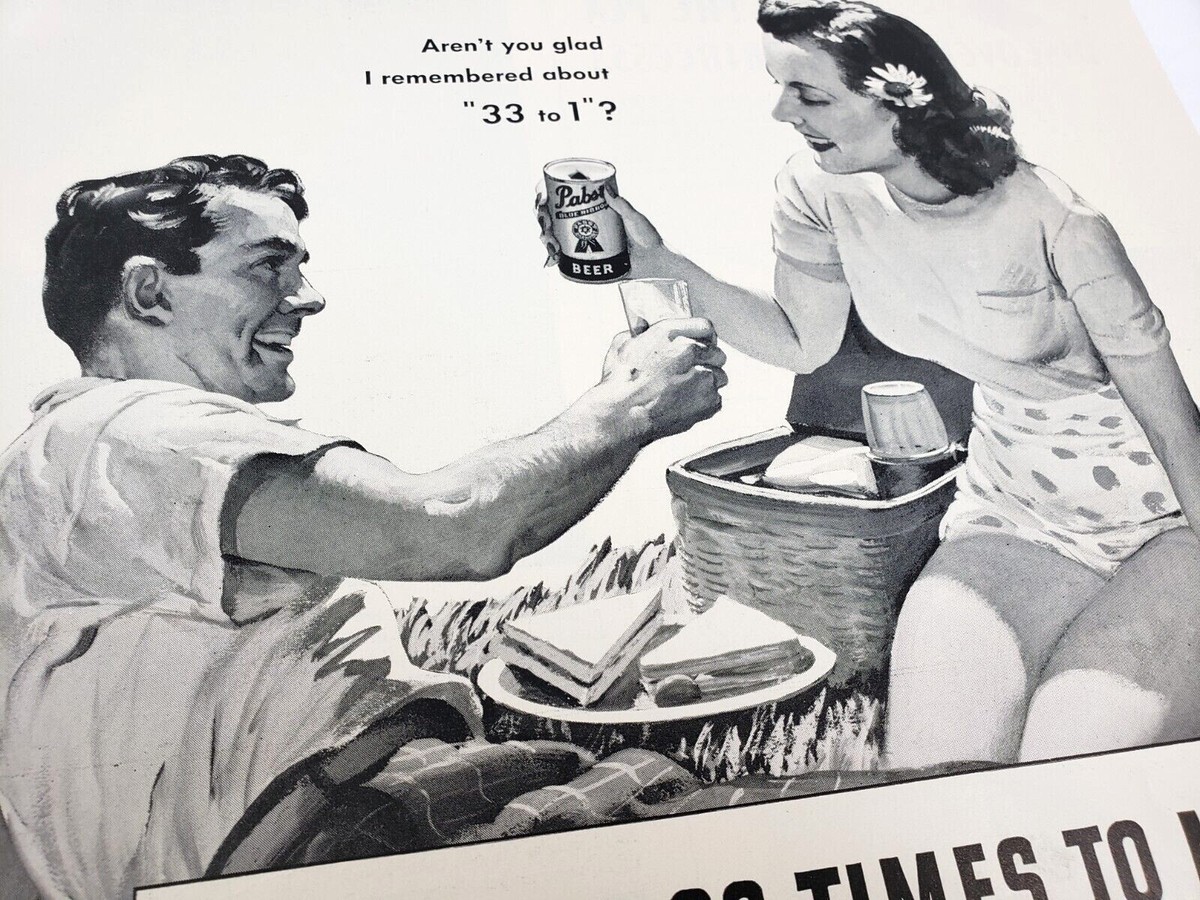
Pabst Blue Ribbon outdoor picnic advertisement — Public domain / vintage advertising archive.
The Vagabonds by Jeff Guinn (Simon & Schuster, 2019) — referenced as a secondary source. All rights reserved by the author and publisher. Not reproduced herein.
The Henry Ford Museum · Collections · Ford Charcoal Briquets · thehenryford.org · 34-artifact archival set including production photography, Kingsford land records, dealership distribution documentation, and Ford Charcoal Briquet Picnic Kit (Object ID 2004.70.2, dated 1935–1945)
Guinn, Jeff · The Vagabonds: The Story of Henry Ford and Thomas Edison's Ten-Year Road Trip · Simon & Schuster, 2019 · ISBN 9781501159305 · Comprehensive account of Vagabond trips 1914–1924, presidential participation, and Firestone's rubber research activities
Smithsonian Magazine · "When America's Titans of Industry and Innovation Went Road-Tripping Together" · January 26, 2016 · Primary documentation of Vagabond trips and Edison's synthetic rubber research for Firestone
Henry Ford Heritage Association · "The Illustrious Vagabonds" · hfha.org · Confirms description of Vagabond trips as "first notable linking of the automobile with outdoor recreation." Detailed account of trip logistics and film crew presence
Airstream, Inc. · Official Heritage · "Wally Byam" · airstream.com/heritage · Confirms first Airstream prototype built on Ford Model T chassis, 1929. Byam born July 4, 1896, Baker City, Oregon
Expedition Portal · "Four Seasons Review: Firestone Destination X/T and M/T2 Terrain Tires" · March 2025 · Documents Vagabond trips as founding context of the Ford-Firestone 100-year OEM relationship; confirms "off-road" nature of all Vagabond travel given non-existent highway system
RVIA · "History of RVs" · rvia.org · Documentation of Tin Can Tourists, auto camping movement, 1920s–1930s trailer and RV development
Dodge v. Ford Motor Co. · Michigan Supreme Court · 204 Mich. 459 · 1919 · Landmark ruling establishing shareholder supremacy; Ford's stated intention to reinvest profits in worker wages and lower vehicle prices for broader public benefit
New York Times · George Stephen, Sr. · Primary quotation on original brazier problem · Cited in Weber Grills corporate history documentation
National Road Heritage Corridor · "National Road History: The Vagabond Camping Trips" · Confirms 1921 trip route, presidential participation, and expedition scale (multiple support vehicles, household staff)