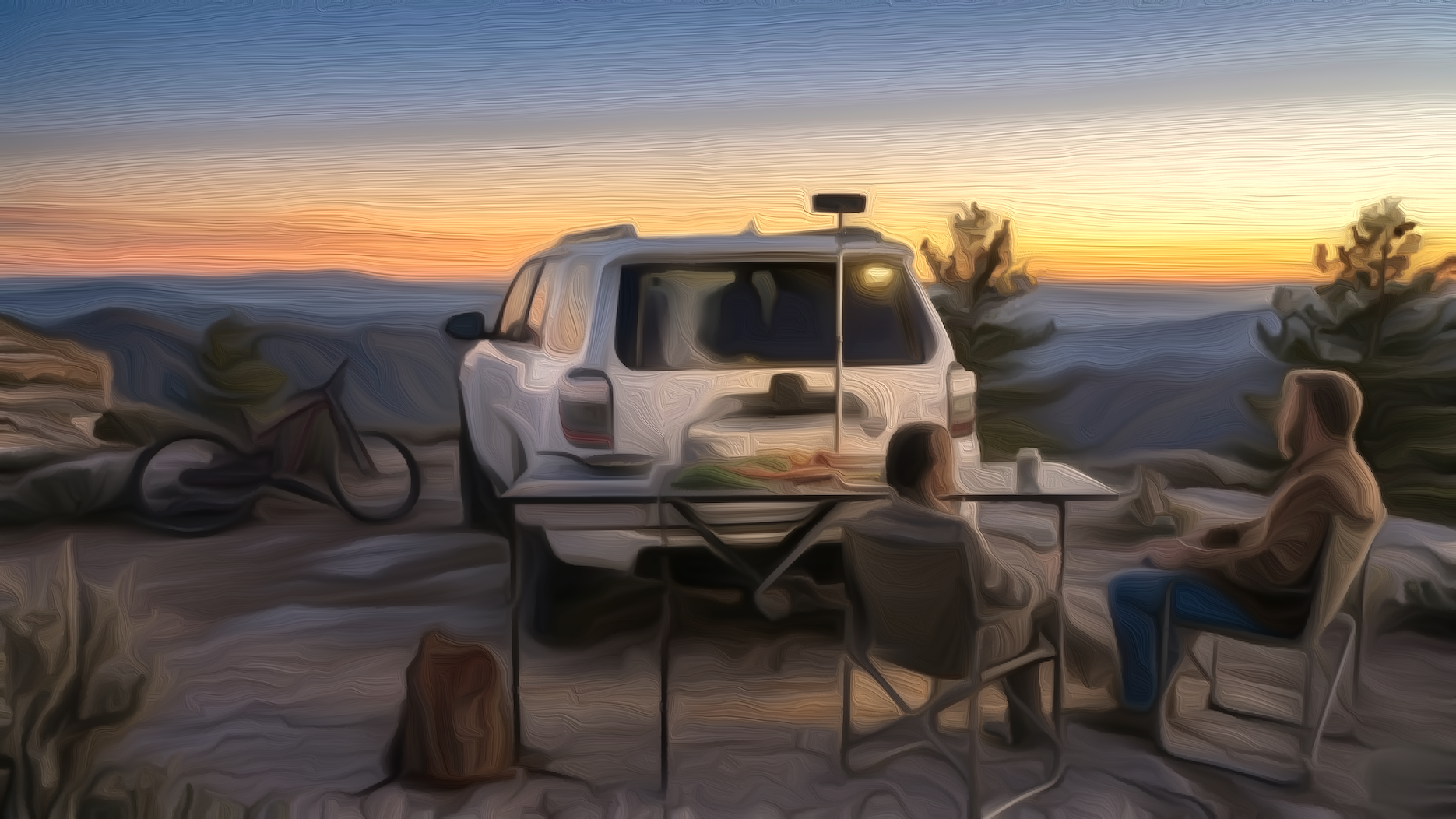
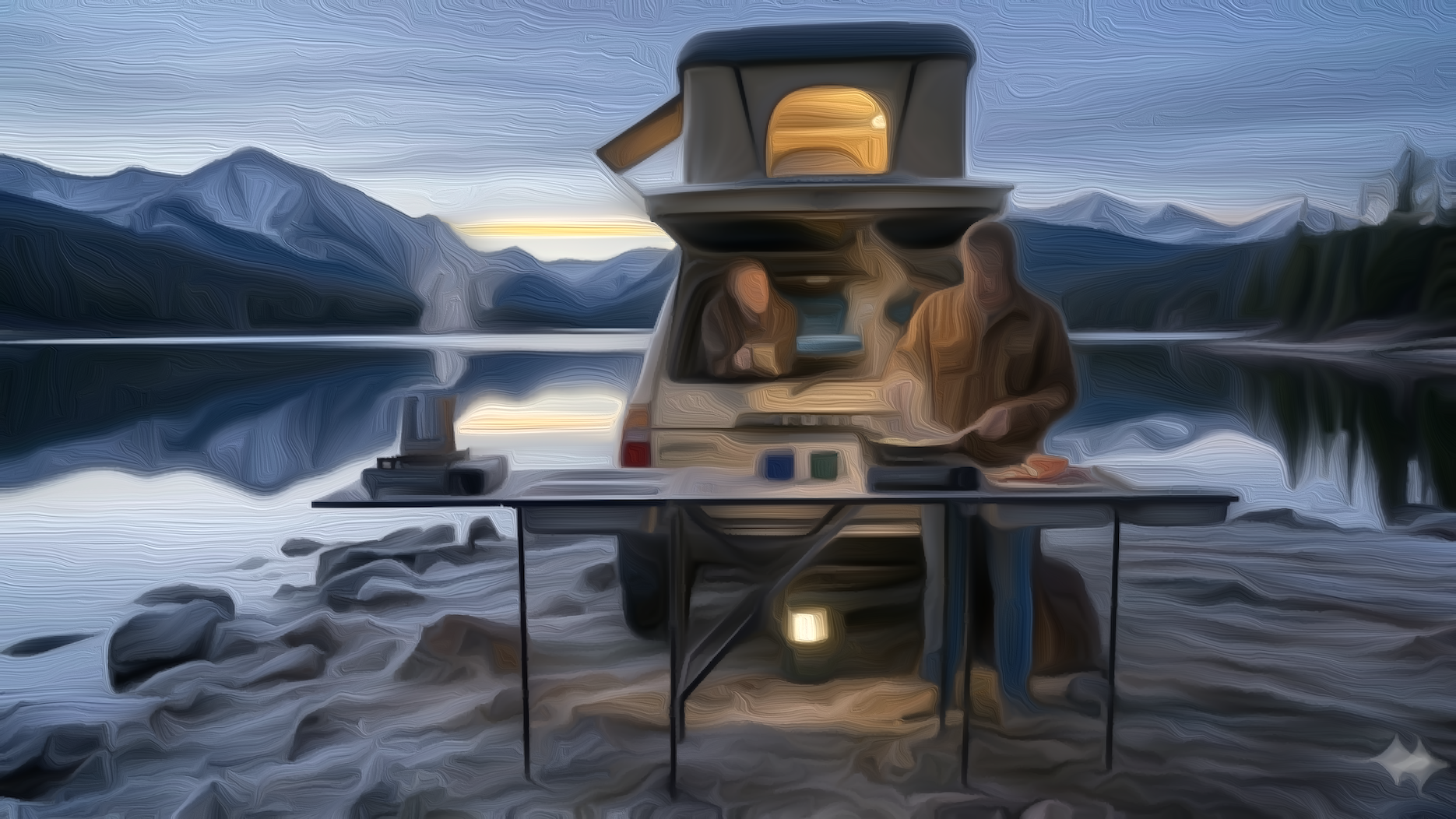
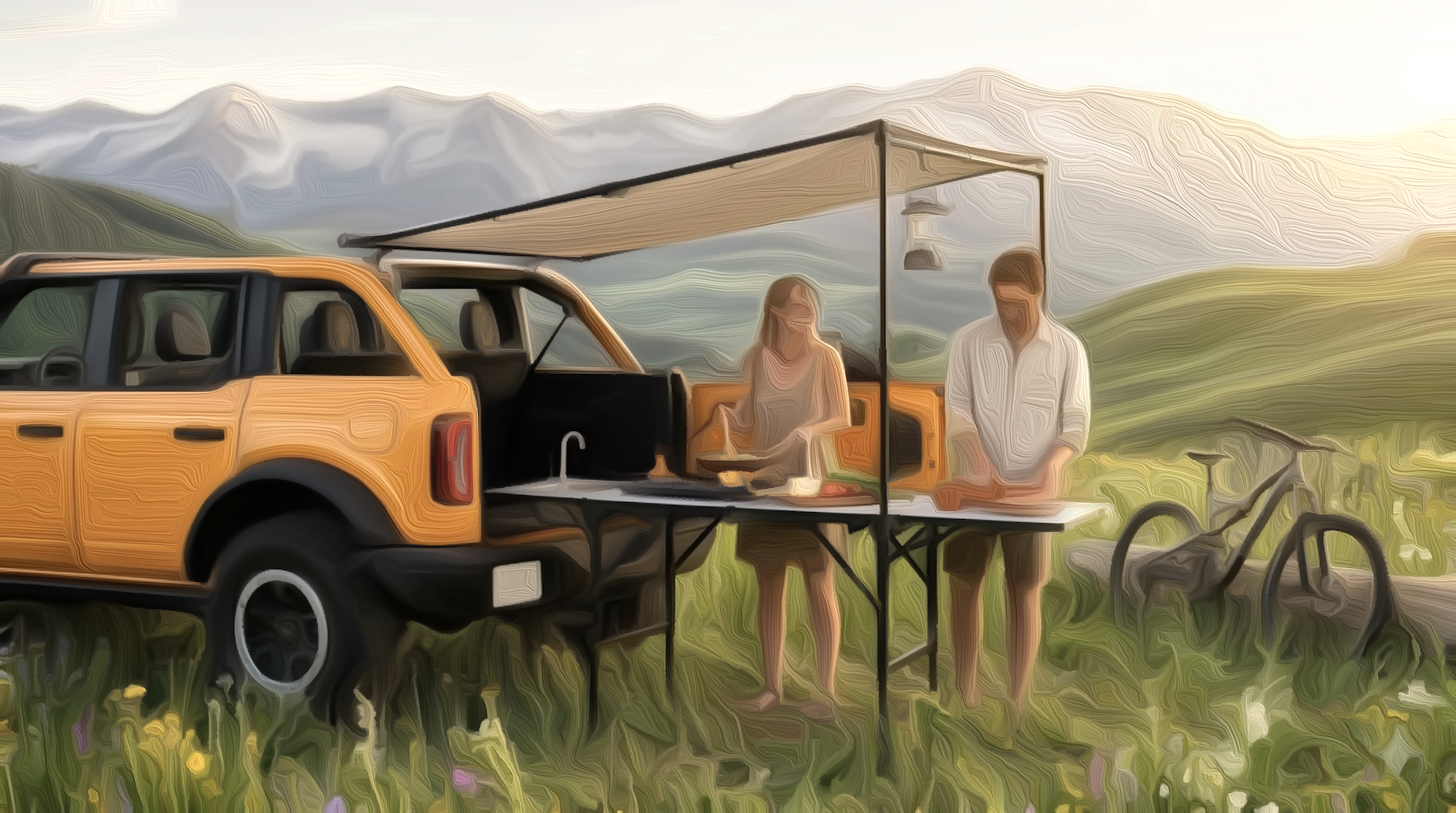
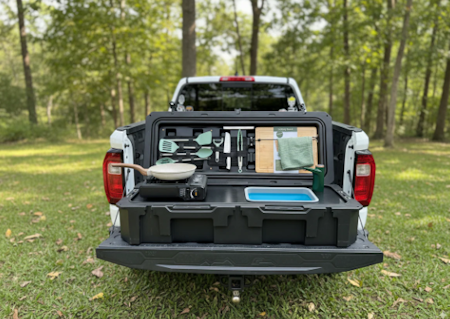
From compact transport mode alongside the Thule Trailway bike rack to fully deployed T-shaped workspace — in under four minutes.
What you're about to watch is the current pre-production unit — Generation 5 of the RAAK system, the version now being hand-built to order. The retrofit solution you'll see uses a YOKE design that mounts to the Thule Trailway, allowing the RAAK to ride in transport mode and then detach and redeploy in a completely different context. That versatility is intentional. It's a preview of the platform's range, not its final form — which is exactly why these first 100 units exist: to find out what "final form" should mean before locking it in.
The long-term mounting solution is a proprietary rack design in development — purpose-built for the RAAK from the ground up. What you're seeing today is the system proving itself in the field. The engineering behind it is what matters — and it works.
Every image here was shot in the field, under real conditions — no studio, no stylist, no artificial lighting except the ARCH itself. Elephant Butte, the Gila, a tailgate in the NMSU parking lot, a snow camp in the Rockies. The RAAK earns its place in every frame the same way it earns its place at a campsite: because it was actually there.
The RAAK isn't a camping accessory that tolerates occasional backyard use. It was built from the beginning to be at home in both worlds — your Elephant Butte campsite and your Saturday afternoon cookout are the same setup. That's not a compromise. That's the design constraint everything else flows from.
255 Parts · 24 Categories · 9 Years Field R&DThe RAAK is a vehicle-mounted modular kitchen system — Generation 5, actively field-tested. It transforms from compact transport mode alongside the Thule Trailway into a fully deployed T-Island — performing equally at the campsite and at home.
The RAAK started the same way most good things in the outdoors start — with a problem nobody had properly solved. Nine years ago, the question was simple: why does cooking outside have to feel like a compromise? Why do experienced outdoorspeople, people who know exactly how they want to live, accept gear that forces them to adapt to the product instead of the other way around? The answer, it turned out, wasn't a better camp stove. It was a platform.
Here's what we noticed along the way: the most capable people outside are already building. They bring the foldout table from the garage, the cast iron from the kitchen, the chair from the patio. They rig windbreaks out of tarps and cargo nets. They hack their gear into configurations nobody at the factory imagined. They don't need to be told how to live outside — they need a system that was designed around how they already do it.
That's the RAAK. Not a product that defines your experience for you — a platform that organizes and elevates the experience you were already building. Practically, that tends to mean one less thing to pack: the cooler, the folding table, the tripod, the vendor booth — things you'd otherwise bring separately, absorbed into a system you were bringing anyway. The hacker becomes a maker. The maker — if they want — becomes something more. We've already had people look at the IGT slot system and start designing their own inserts. We love that. If your insert is exceptional, it might find its way into the Tymmber ecosystem. The platform is open by philosophy, not just by design spec. All the Power to the Hack.
"Why should a rack do more than carry stuff? Because the person behind it is capable of so much more than just arriving."
Mike Isaacs · Founder · Field Notes · Sierra County, New MexicoThe RAAK is not a product category — it's a platform. It begins as a rack that carries things, then transforms into a workspace that enables entirely new experiences. The distinction matters: a product solves one problem. A platform creates the conditions for many. Every major system below is a node in that platform — each one adding capability without adding complexity.
Most outdoor racks are designed to carry things from A to B. The RAAK carries things — and then becomes something else entirely when you stop. That second life is where the value is. The system deploys to a T-Island, connects to third-party gear via the IGT slot architecture, integrates with the broader Tymmber ecosystem, and then packs back down for the drive home. Same product. Infinite contexts.
The T-Island is the RAAK's deployed state — a T-shaped workspace that puts every cooking function within one step and one arm's reach, exactly as it would be in a home kitchen. Three zones, one reach: prep left, cook center and right, serve behind. The transverse arm creates those zones without requiring the cook to move. Same workflow as home. Different view.
Every surface on the T-Island is an application switcher. The center slot accepts the Tymmber Coolr — closed, it becomes a prep surface flush with the surrounding counter; open, it's cold storage within arm's reach. The left wing holds the cutting board. The right wing holds the burner. You don't walk. You cook. The same island you gather around at home, now anchored wherever you stopped.
The ARCH is the RAAK's integrated lighting system — purpose-built for the T-Island workspace. It illuminates the full cooking surface without requiring a separate lantern, headlamp, or improvised setup. The system deploys with the workspace and retracts with it. After dark at a campsite is one of the most common cooking scenarios in outdoor life — the ARCH treats it as a first-class design requirement, not an afterthought.
Most camp kitchen gear assumes daylight. The RAAK doesn't. The ARCH system turns the T-Island into a functional workspace at any hour — the same ergonomics, the same workflow, the same capability. Camp setups that work perfectly at noon and fall apart at 8pm aren't finished. The ARCH is what finishes the design.
The YOKE is the RAAK's removable mounting interface — the connection point between the system and its vehicle platform. In the current Generation 5 prototype, the YOKE attaches to the Thule Trailway bike rack, allowing the full RAAK system to ride in transport mode and then detach for deployment or reuse in a home context. It's this removability that enables the Hitch to Home principle in practice.
The YOKE is the reason the RAAK isn't permanently bolted to a single truck. It can be removed from the Thule rack, stored, and reused — on a different vehicle, at a home mounting point, or as part of a standalone deployment. A proprietary rack system designed specifically for the RAAK is in development for the next generation. The YOKE is the bridge between where we are and where we're going.
The RAAK surface uses an IGT-compatible slot architecture — supporting existing market standards for interoperability. This means cookware, inserts, and accessories from Snow Peak and compatible manufacturers slot directly into the RAAK surface. You don't have to abandon gear you already trust. The RAAK is designed to accommodate it.
The decision to build around IGT standards rather than a proprietary slot system was deliberate. Proprietary lock-in protects market share in the short term and shrinks the user's world in the long term. The RAAK is designed to grow the ecosystem, not fence it. Third-party developers, gear makers, and existing market standards are all welcome in the RAAK platform. The more it integrates, the more capable it becomes.
Designed to perform equally well across recreational, professional, and entrepreneurial applications. The same system — different deployments. Different seasons of life.
You buy this in your twenties, solo, heading into the Gila with nothing but time. You bring it to the tailgate the same weekend. A few years later, there's someone across the fire from you. Then a kid in a camp chair asking to help. Then two kids. One Saturday morning, the kids set up a card table near a trail race aid station — lemonade, a hand-lettered sign, change in a cigar box — using the same RAAK Rail that held the cooler an hour ago. That evening, the cooler goes back in, the griddle comes out, and the same RAAK is dinner for the whole crew. One RAAK. Two uses. One day. And somewhere in there, without you announcing it, you've been teaching them something this whole time.
Race morning, this RAAK was the aid station — and a card table away, a kid's lemonade stand. By dusk, the same rig at the same hitch is dinner for the whole group, Trailpod domes glowing behind them. Nothing about the RAAK changed between morning and evening. What changed was who was using it, and for what — which is the entire point of a platform built to serve the outdoors and the home equally well.
RAAK Row · Family Life · One Platform, Every ChapterSnow on the ground or fire in the desert. Rocky Mountain summer or New Mexico winter. The RAAK deploys the same way in every condition — full T-Island, standing height, real kitchen. You don't cook differently because the season changed. You don't cook differently because the location changed. That's the point.
Plates set for four. Running water from the sink. Pot on the burner while the campfire roars behind it. The RAAK doesn't care where you stopped — it sets up the same kitchen it always does.
Everyday Outdoor · Base Camp · All SeasonsTransport mode rides compact alongside the Thule Trailway — secure, accessible, out of the way. Deploy at any pullout, rest stop, or trailhead without unpacking the entire vehicle. Any road. Any stop. Full kitchen.
Everyday Outdoor · MobileReach into the T-Island, pull out the limes. They've been on ice in the center slot since you left home this morning. Slide the walnut lid back, grab what you need, slide it closed. The cutting board is right there. The burner is already lit. The San Pellegrino is cold. The wine glasses are set behind you on the ARCH surface. The mesa is turning orange in the last light.
That's not a camping meal. That's dinner. The RAAK doesn't know the difference between your kitchen and this lakebed — and neither should you. Cold storage, prep surface, heat source, serve surface. All within one step. All within one arm's reach. Cook Like Home. Outside.
Hitch to Home · Cook Like Home · T-IslandPicture a Saturday morning at a soccer tournament parking lot. Dad is at the RAAK cooking a real meal at the hitch. The baby is napping in the SoloPod on the roof — elevated above the noise, the foot traffic, the ground heat — safe and visible through the KANOPY window. Mom is at the SUV checking on the little one reaching out from inside. The older kid is on the field. Nobody is stressed. Nobody is managing logistics instead of watching the game.
This is what the Tymmber ecosystem was built for. Not just a kitchen at the hitch — family infrastructure. The RAAK and SoloPod together give traveling sports families their weekends back. For the family logging 8,000 miles a year following their kids from field to field, this isn't outdoor gear. It's how they live.
Everyday Outdoor · Family Infrastructure · Tymmber EcosystemThe simplest version of this is a card table, a pitcher, and a hand-lettered sign — a kid's lemonade stand set up on the same RAAK Rail that's holding the aid station's water cups and medical kit twenty feet away. The RAAK platform is a mobile workspace, not just a kitchen, and that's the first rung of this ladder, not a separate use case from the rest of it. Nobody had to pack a separate vendor table or pop-up booth — the same surface that held breakfast an hour ago holds the lemonade pitcher now.
Scaled up, the same platform becomes RAAK Expo — a row of RAAK Rails in a parking lot, each one a different small business. An artist selling nature-inspired pottery. A "Desert Prints" photographer. A "Small Business" booth that's really someone's whole operation that weekend. Food entrepreneurs, mobile caterers, outdoor content creators, traveling artisans — and the nine-year-old who started with lemonade. Your operation travels with your vehicle. Your overhead stays home, whatever scale you're at.
Entrepreneurial · Creative Economy · RAAK Row · RAAK ExpoSee RAAK Row & RAAK Expo at an Adventur event → The curriculum behind the lemonade stand →
Most of birding is driving between spots, not staying at one. Leave the RAAK in its quick-surface configuration and the platform doesn't have to go away between stops — pull over, the surface is already there. Mount a gimbal head directly to it — no tripod legs, no setup — and the same leveling system that keeps a pot from sliding off the table at camp is what keeps a long lens tracking smoothly without drift. Shoot, pack the lens away, pull back onto the road. When something crosses overhead and you don't have time to set up, you don't have to.
And for the days when one spot is the whole plan — a blind, a hillside, a river bend — the RAAK becomes the base that makes extended field time sustainable. Full deploy, real meal, stay out longer. The outdoors rewards patience either way. The RAAK just makes sure you're ready for whichever kind of day it turns out to be.
Everyday Outdoor · Field Arts · NatureThis isn't a positioning statement — it's a design constraint. Before any component ships, before any geometry is finalized, it has to answer one question: does it work equally well at a campsite and on a back patio? If the answer is no, the design isn't finished. This principle sits upstream of everything else in this list.
Versatility · Multi-Purpose · Self-Repair · Interoperability · Integration · SustainabilityEvery component in the RAAK traces back to one of these principles. If a part doesn't serve at least one of them, it doesn't ship.
Most outdoor gear is designed by people who will never use it the way it's marketed — engineered to a spec sheet, tested in a lab, shipped to solve a problem nobody on the design team has actually had. The RAAK was built the other way. Every joint, every surface, every dimension traces back to a specific moment in the field when something didn't work — a cooler too far from the stove, a prep surface that wasn't there when it was needed, a system that couldn't ride to the trailhead and then become dinner. Nine years and a thousand-plus nights of those moments, one at a time, became this.
What does it mean to own something built that way? It means that when you reach for something and it's exactly where it needs to be, that's not an accident — someone needed that same thing, in that same kind of moment, and fixed it before you got there. And it means the RAAK isn't finished being built this way. The first 100 units exist because the field still has things to teach this design — and the people who own these early units are the ones who'll teach it.
Most outdoor gear forces you to choose: portable or functional, trail or camp, vehicle or home. The RAAK refuses that tradeoff. Every configuration serves multiple contexts — outdoors and at home — without compromise. Versatility isn't a feature added at the end. It's the test every design decision must pass from the beginning.
Principle · Outdoors and Home · Equally WellThe RAAK began as a rack — and it remains the best rack it can be. But it doesn't stop there. A platform transforms: from carrying things to enabling new applications and experiences, from rack to kitchen, from transport to workspace. The outdoor industry sells you appliances. Tymmber builds platforms. One product that does more is worth far more than five products that each do one thing.
Principle · Platform Over ApplianceWe design all Tymmber products for self-repair from the beginning. This isn't a warranty extension — it's a design philosophy. Products that can be repaired in the field, by their owners, using common tools, last longer, cost less over time, and don't end up in landfills after the first failure. Landfill Sprawl is a design problem. The RAAK treats repairability as a first-class engineering requirement, not an afterthought.
Principle · Longevity Over ObsolescenceThe RAAK must compete vertically in its category — as a rack, it must be the best rack available. Then it must transform into a maximum viable platform: from carrying things to enabling new applications, whether in the outdoors or at home. Horizontally, it integrates with existing market standards, third-party gear, and the Tymmber ecosystem. The competitive advantage isn't being better than alternatives — it's making alternatives unnecessary.
Principle · Compete Vertically · Integrate HorizontallyThe RAAK must serve all who seek adventure in the outdoors — from those managing physical limitations to the fully able-bodied, from solo travelers to families, from those exploring with pets to those with children. Unified Terrain means the system doesn't exclude. The design accommodates a range of users and contexts because the outdoors itself doesn't sort people by ability. The RAAK shouldn't either.
Principle · The Outdoors Is for EveryoneThe RAAK is a platform and a system that elevates outdoor appliances off the ground — increasing comfort and keeping the workspace out of reach for nature's other inhabitants. By elevating the outdoor cooking experience, you avoid leaving behind the remnants typical of ground-level camping: grease, debris, and the trace evidence that marks a site as used. Leave No Trace is a design constraint, not a marketing tagline. The RAAK deploys and retracts without modifying the site.
Principle · Minimum Viable ImpactThe outdoor industry studied your complaints and built you a box. We spent nine years in the field and built you a system.
There's a camp kitchen on the market right now that leads with this: "We studied thousands of forum posts, reviews, and Reddit threads." They mean it as a credential. We see it differently. Designing gear from complaint threads is like writing a cookbook by reading Yelp reviews. You'll solve the symptoms. You'll never understand the meal.
The RAAK wasn't designed from a desk, a survey, or a focus group. It was designed across 1,000+ nights outdoors, 30,000+ miles traveled, and nine years of refusing to accept that the best the market could offer was a folding table and a prayer. Every decision in the RAAK came from a moment in the field where something failed — and the question became: why does this have to be this way?
That's not a complaint. That's a design brief.
Here's another way to read this list: every item below is something you might not need to pack, because the RAAK already does its job. That's not a guarantee — for some trips, the standalone version is still the right call, and we'd rather say so upfront than pretend otherwise. But if you're working out what comes off the list when the RAAK is already coming with you, this is that list.
A single-burner backpacking stove and a lightweight folding table. Costs under $150, weighs under 5 lbs, works for solo or couple cooking in any condition.
DIY or commercial truck bed slide-out kitchens. Permanent install, high storage capacity, works well for truck owners who don't need the system to transfer between vehicles.
Integrated kitchen solutions built into rooftop tent platforms. Seamless if you already own a rooftop tent ecosystem and don't need hitch-to-home flexibility.
Military-grade case with custom foam inserts organizing cookware, fuel, and prep tools. Extremely durable, portable, modular within its own system.
We know who they are. We respect what they've built. The outdoor industry has some extraordinary companies. Here is where we genuinely differ — and where we don't.
Most brands don't show you this table. They're afraid you'll leave. We're not — because the person who reads this comparison and chooses a competitor probably should. And the person who reads it and chooses the RAAK will be a Tymmber customer for life. That trade is worth it every time.
Every outdoor brand has a vision for how you should experience the outdoors. Thule has theirs. Yakima has theirs. Snow Peak has theirs. There is nothing wrong with that — these are exceptional companies building exceptional products. We celebrate every one of them.
Our vision is just a little different. We believe the outdoors belongs to the builder. The hacker. The person who already drags their patio furniture to the campsite because they know exactly how they want to live out there. We didn't invent that instinct — we just gave it a system. All the Power to the Hack.
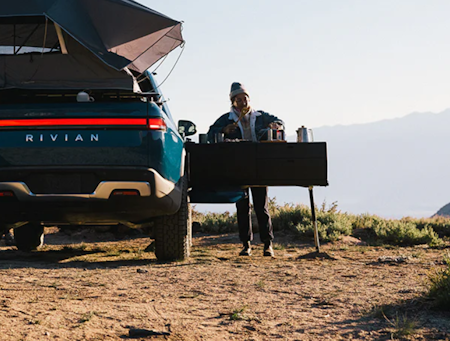
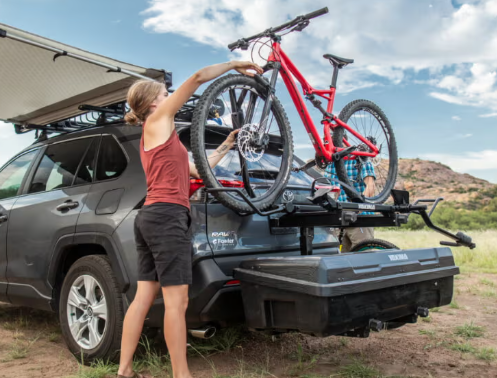
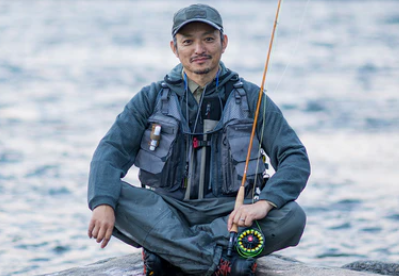
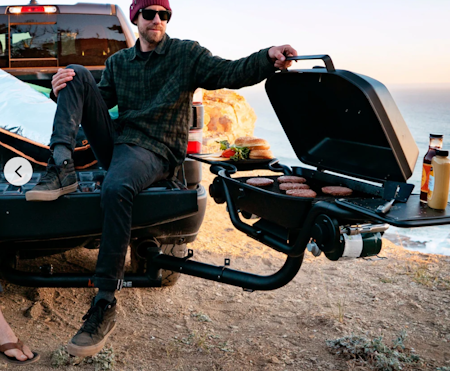
The RAAK doesn't compete with any of these. It completes the stack.
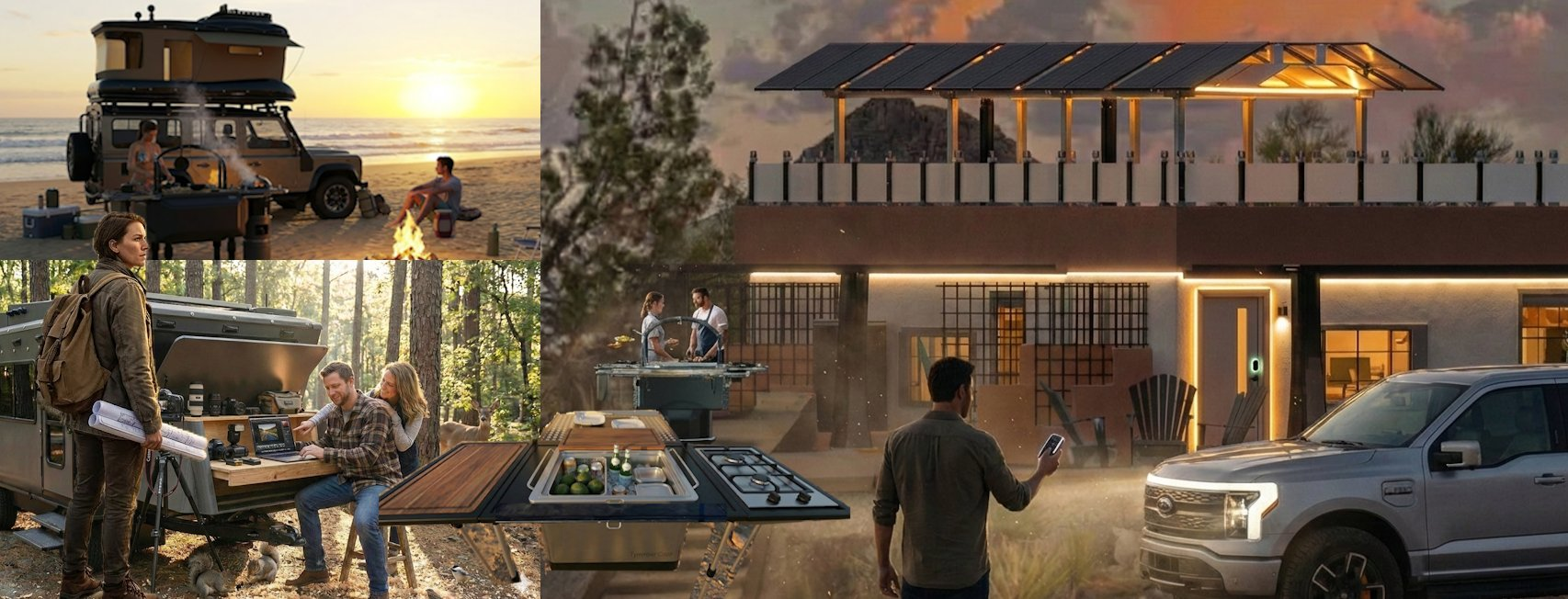
The outdoor industry has been selling individual products for decades. A tent here. A stove there. A cooler, a rack, a chair. Each one its own purchase. Its own learning curve. Its own failure mode. None of them talking to each other.
That's not an outdoor experience. That's a collection of transactions.
The moment of clarity came at a prototype bench at New Mexico State University, working alongside engineers at Sandia and Los Alamos National Laboratories. The RAAK was taking shape — a mobile kitchen system designed to put every cooking function within one step and one arm's reach. And the question that wouldn't go away was: what happens next? When you finish cooking, where does the system go? When you're ready for shade, for shelter, for a longer stay — what connects to what?
The outdoor industry had no answer. Everything stopped at the product.
Two decades earlier, the Connected Home industry had learned the most important lesson in consumer technology: devices are only as valuable as their ability to work together. A smart thermostat that doesn't talk to the lighting system isn't smart. It's just digital. The value compounds when the ecosystem connects. Individual products become a system. A system becomes a lifestyle.
The outdoor industry never learned that lesson. The gear got better. The connectivity never came.
Hitch to Home is the answer to that missing lesson — a connectivity methodology for the outdoor experience, designed to meet you exactly where you are and grow with you as your skills, confidence, and desire to be outside expand.
For the Everyday Outdoor consumer — the person who wants to spend more time outside but finds it more work than it should be — the system removes the friction. You don't have to master the outdoors all at once. You start with the RAAK. A real kitchen at the campsite. A real meal on the first night. You come back because it worked. When you're ready for shade, the KANOPY connects. When you're ready to stay longer, the TOTE carries more. When you're ready for shelter, the Casita is waiting. Every product you add makes every product you already own more capable.
For the seasoned outdoor consumer — the person who has been assembling a fragmented collection of gear for years — the Tymmber ecosystem gives your existing skills a connected infrastructure for the first time. You don't start over. You connect forward.
The RAAK is the cornerstone. Hitch to Home is the system it anchors.
"The key to solving low participation rates — and giving the industry something to aim for — was to systematize the outdoor product experience. To make things work together. Just like the Connected Home."
Mike Isaacs · Founder · Tymmber Outdoor™The RAAK is the point of origin — the product that hitches to your vehicle and begins the journey. As you move from vehicle to site to home, the system expands: the Kaddy transports between zones, the Casita establishes the base, the Stump anchors the social space, the Trailpod keeps the ecosystem mobile for families on the road. The RAAK works standalone. It works better as part of the whole.
The RAAK is designed to integrate across three planes — within the Tymmber ecosystem, with your vehicle platform, and with the third-party gear you already own.
You shouldn't have to throw away what you already have to use the RAAK. The Snow Peak you've cooked on for a decade, the Thule rack already on your hitch, the Yakima system on your roof — the RAAK was designed to work alongside the gear you've already trusted, not replace it. That's not a limitation worked around after the fact; it's the same "serve the outdoors and the home equally well" constraint applied to everything else in your kit. The system grows with you. It doesn't replace your history — it extends it.
The outdoor industry has a quiet assumption built into almost every product it makes. It assumes the user is able-bodied. You can see it in every design decision — the handle heights, the deployment mechanisms, the standing-reach geometry. Nobody says it out loud. But it's there.
Tymmber doesn't make that assumption.
The RAAK deploys at hitch height — which happens to be exactly the right ergonomic working surface for someone in a wheelchair. Not because we designed an accessible version. Not because we added a special configuration. Because we designed it right the first time, and right means it works for everyone at the table.
The person in the wheelchair in these images isn't being accommodated. They're cooking dinner for their family at Elephant Butte while the dogs sit at their feet and the sun goes down behind the mesa. Their hands are on the surface. They're passing food to the person standing next to them. Nobody is helping them. Nobody needs to. That's not a feature. That's the whole point.
Unified Terrain means the outdoors belongs to everyone who seeks it — from the fully able-bodied to those navigating the world differently, from the young to the old, from solo travelers to families with newborns, from pet owners to those who simply need more time outside than the current market makes possible. Our job is to make sure our products are never the reason someone can't participate.
"If the product only works for the person who looks like it was designed for, it wasn't finished."
Tymmber Design Canon · Unified Terrain PrincipleThe RAAK deploys at standard vehicle hitch height — a working surface ergonomically matched to wheelchair users without any modification, adapter, or special configuration. This wasn't designed in. It was designed from the beginning. The distinction matters: accommodation is an afterthought. Unified Terrain is a starting point.
Design · Not Accommodation181 million Americans participate in outdoor recreation annually. The assumption that outdoor gear is for the able-bodied, the athletic, and the young is a market failure as much as a design failure. The adaptive sports market, the aging outdoor community, the veteran population, the family with a mobility-limited member — these are not edge cases. They are the majority of the people who need better gear most.
Market · Underserved and UnderestimatedUnified Terrain is bigger than one product and bigger than one page. The full design philosophy — what it means to build outdoor infrastructure that genuinely serves all people, and what the industry gets wrong by not trying — is documented in the Franklin Library. This is the beginning of that conversation, not the end of it.
Read more in the Franklin Library →