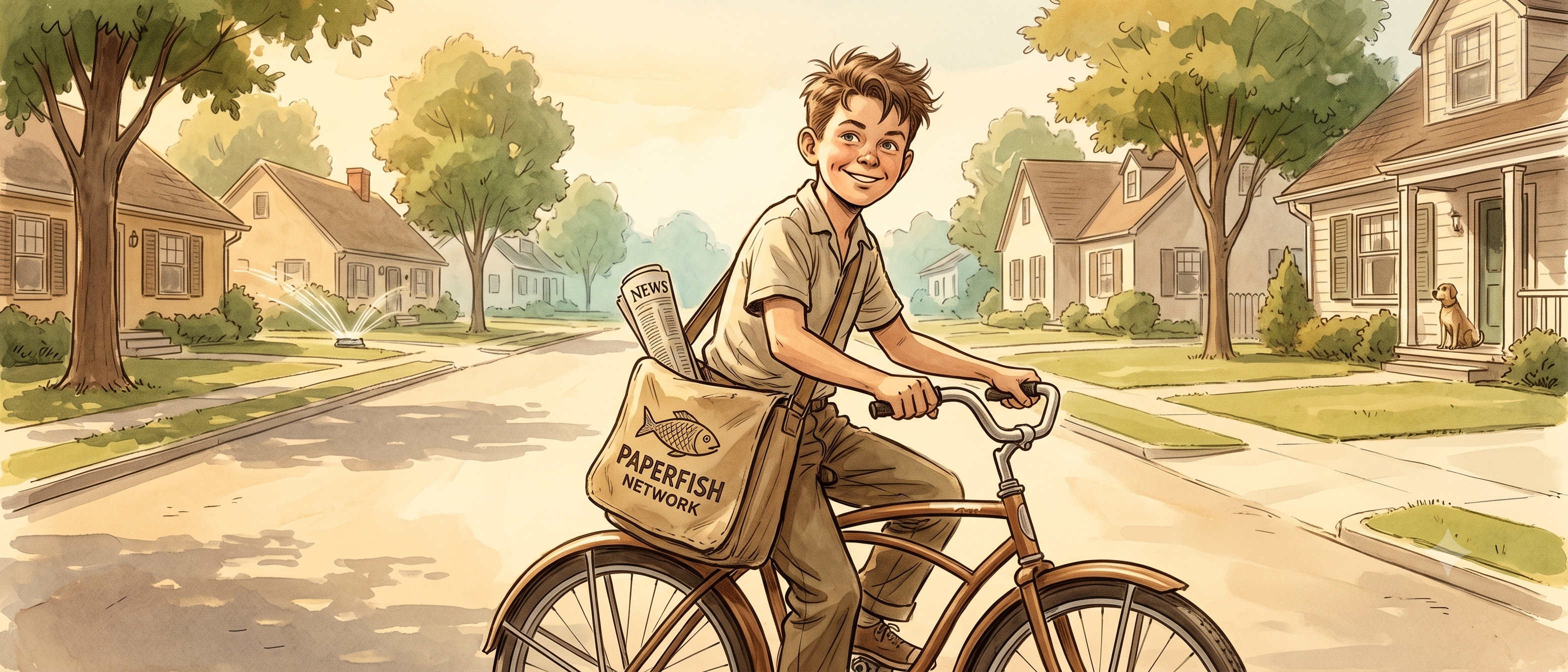
A true story about a boy, his grandfather, a mountain lake in the San Diego backcountry built by mule teams in 1888 — and the summer that changed both of them forever.
By Mike Isaacs · Founder & Publisher, Fish Taco Gazette · Field notes from Lake Cuyamaca, Summer 2026
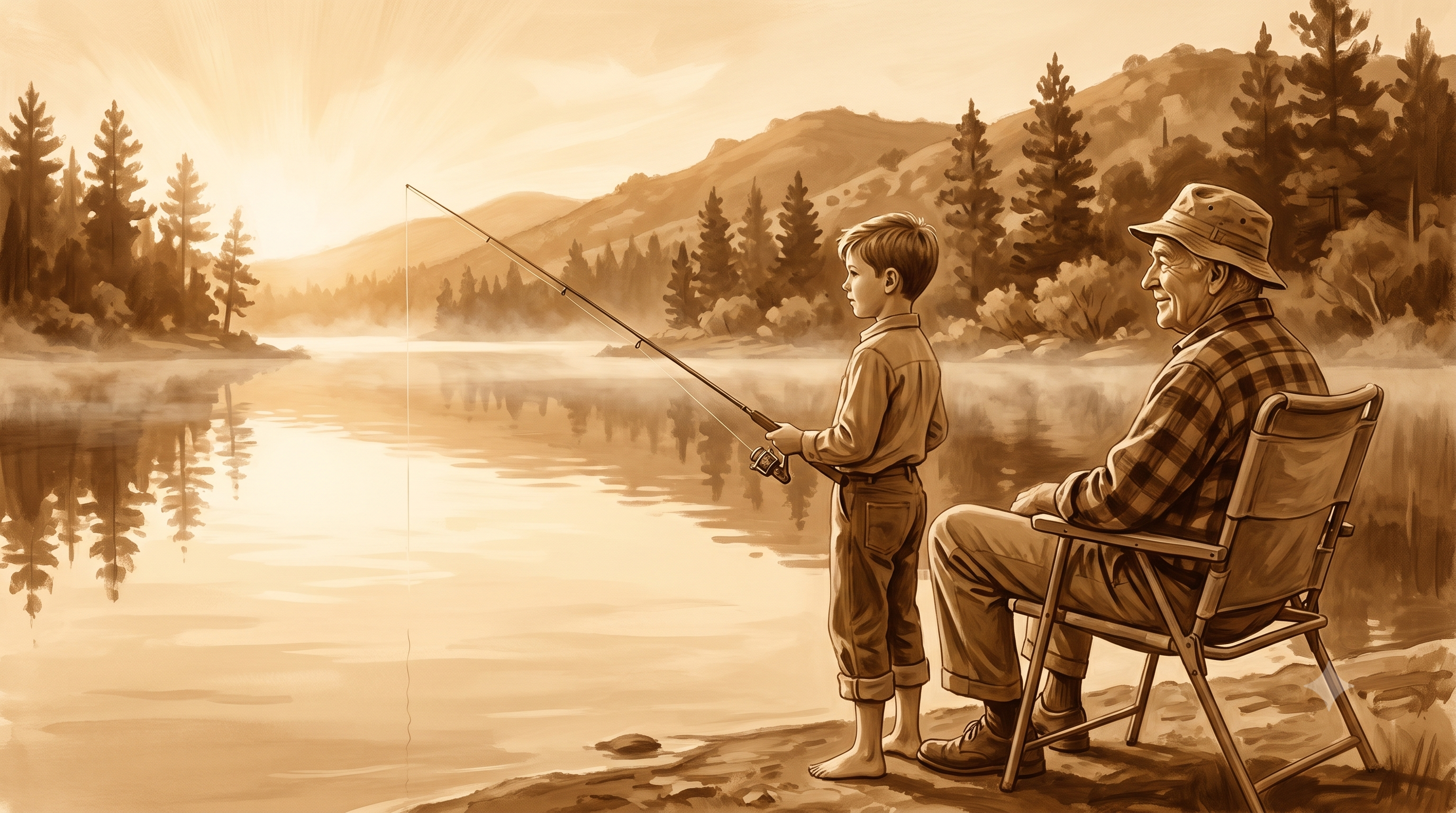
Lake Cuyamaca, Julian CA · 4,635 feet above sea level · The west shore at first light, summer 2026 · Where Huck finally stopped checking his phone long enough to hear the fish
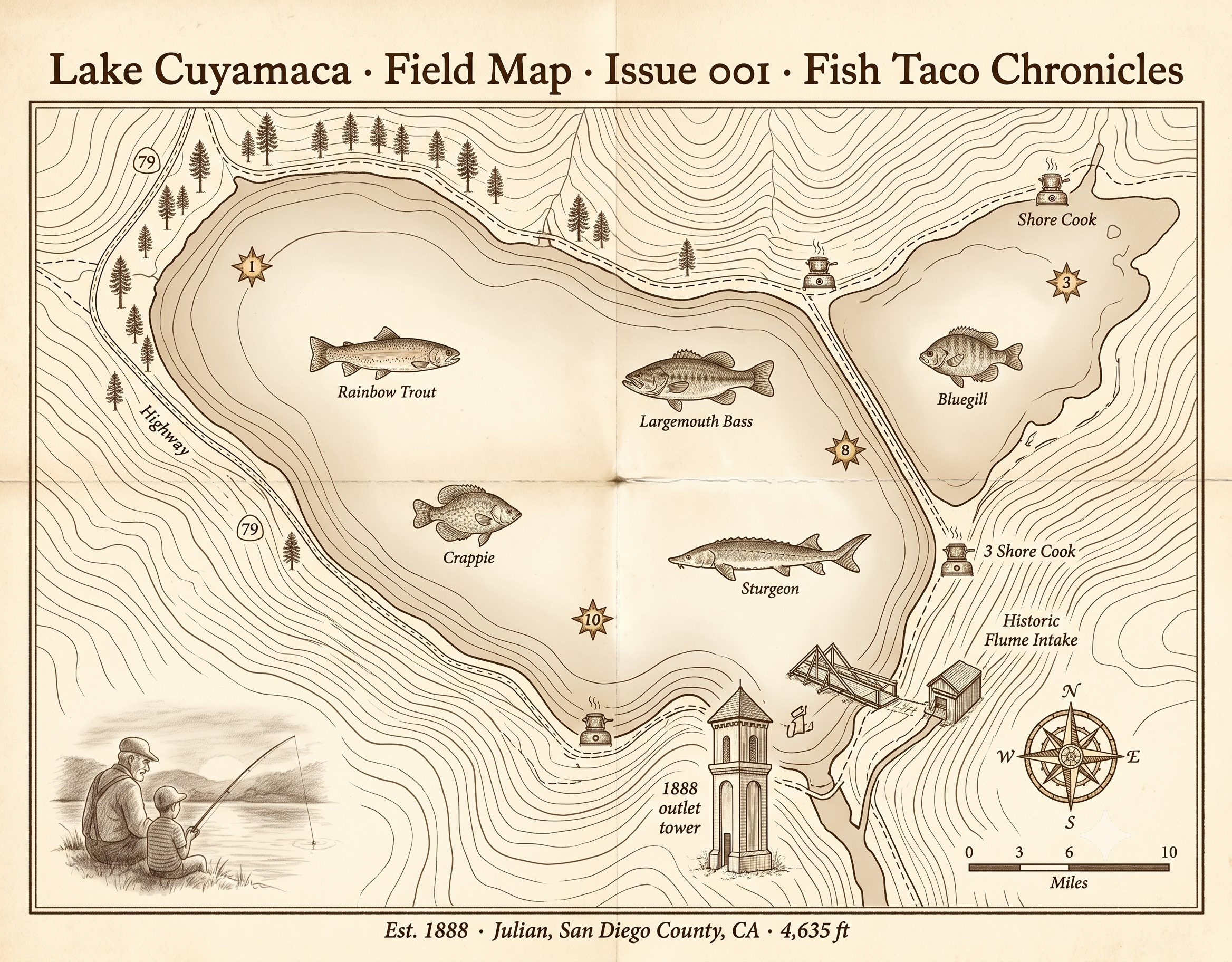
Lake Cuyamaca sits at 4,635 feet in the mountains east of San Diego, up Highway 79 past the apple orchards of Julian, where the chaparral gives way to ponderosa pine and the air gets thin enough that you notice it. The lake has been here since 1888, when the San Diego Flume Company built an earthen dam to pipe mountain water down to the growing city. Eight hundred mules. One hundred wagons. Nine million feet of redwood. All of it to carry water from these hills to the people below who needed it.
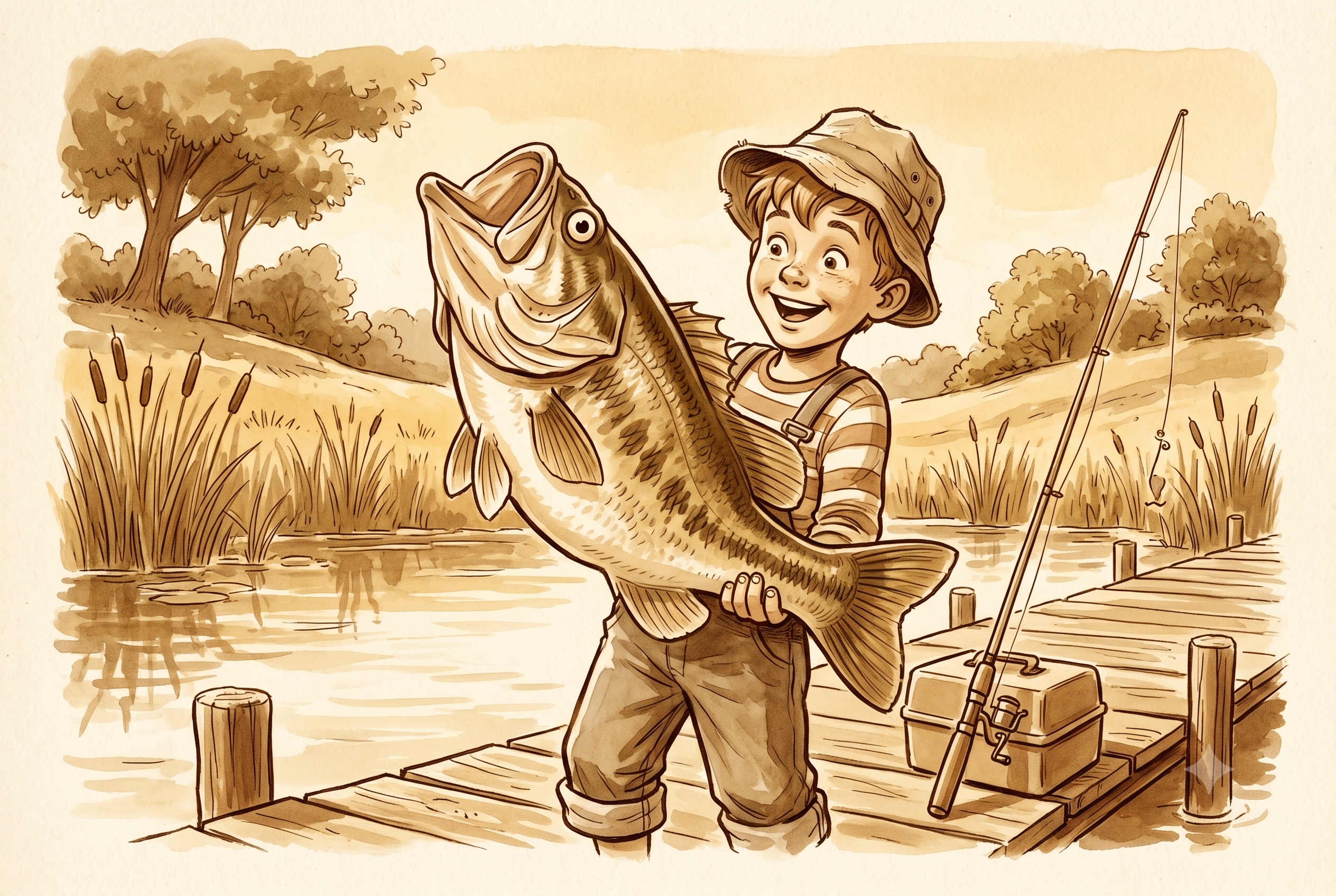
Mike Isaacs's uncles were here in the 1960s when the Recreation and Park District rebuilt what drought and war had undone, dredging a deeper western basin and restocking what the dry decades had emptied. They didn't know they were building the place where, sixty years later, a boy named Huck would catch his first rainbow trout on a summer morning while his grandfather watched from a camp chair and said nothing at all.
"The fish will tell you when they're ready. The trouble with most people is they stop listening before the fish start talking."
— Gramps, West Shore, Lake Cuyamaca, Summer 2026
Huck was eleven. He had arrived at the lake under mild protest, convinced that fishing was something old people did when they ran out of better ideas. His grandfather — Gramps, to anyone within earshot — had been driving up to Cuyamaca since before Huck's father was born. He had a spot on the west shore near the old outlet tower, where the trout liked to hold in the cold water coming off the dam. He had a cooler — the good kind — packed with everything a proper morning required. And he had all the patience in the world, which is what you need when you're teaching someone something that can't be hurried.
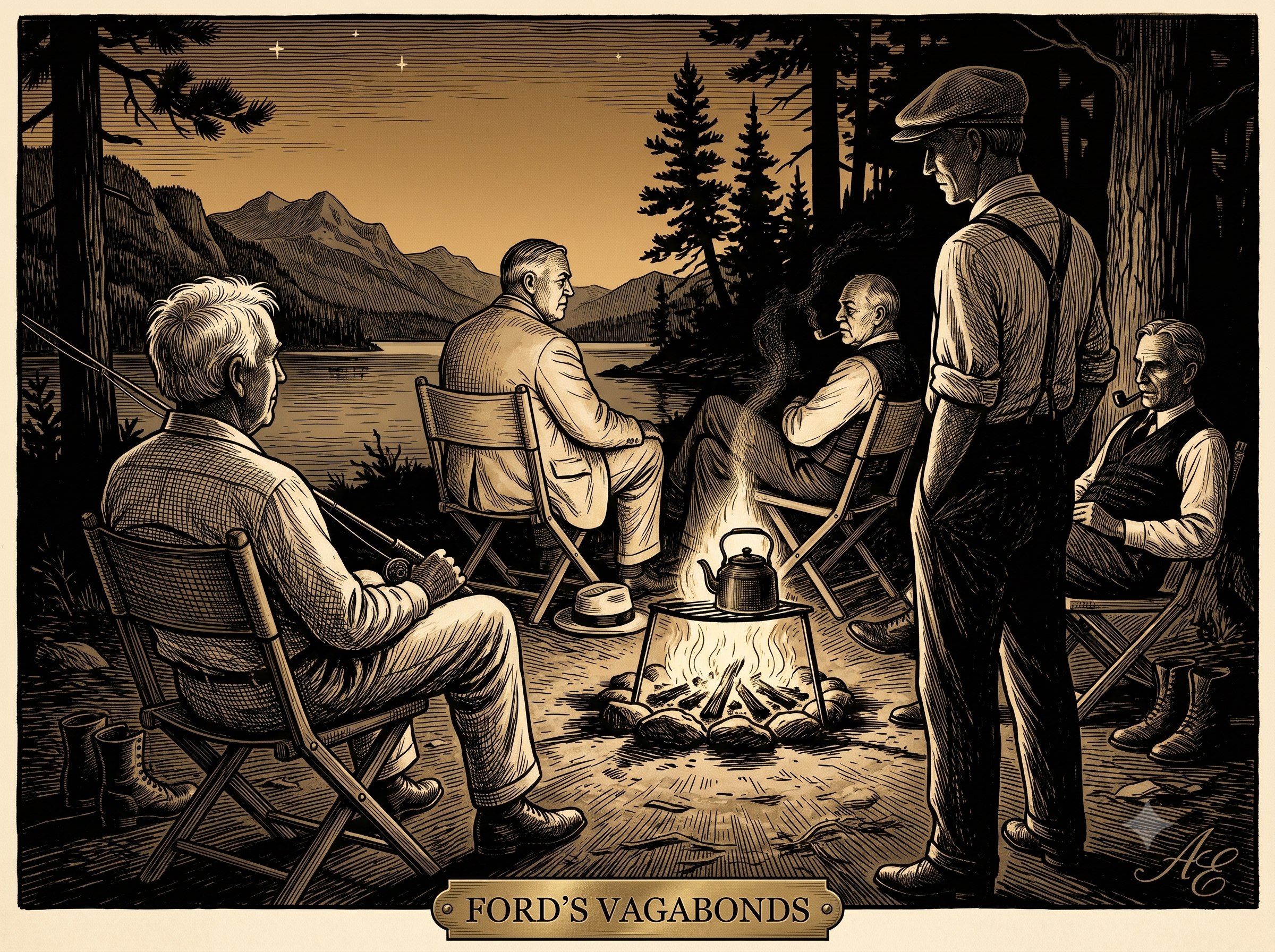
Henry Ford, who himself made a habit of disappearing into the American wilderness with Edison and Burroughs and Firestone — four men who between them had changed the modern world — used to say the best ideas came to him not in the factory but beside the water, sitting still long enough to hear something. The Vagabond trips, they called them. Four of the most consequential men in American industry, sitting around a campfire arguing about which way the wind was coming from.
Continued on Page A2 · "What Huck Caught That Wasn't a Fish" · and the trout taco that followed